A question we hear more often than you’d think: A client had seen a competitor receive a regulatory inquiry and wanted to know whether their own platform was structured the same way. That question tends to surface right after a state attorney general makes an example of a sweepstakes casino or when a platform review raises questions about the underlying mechanics.
The answer we’d give: a sweepstakes casino is legal for one specific reason. It removes consideration from the equation.
Without that element, the activity is a promotion rather than gambling, regardless of how the platform is marketed. That design choice is what separates a legally operable platform from one that regulators will eventually target.
The legal test behind the dual-currency model
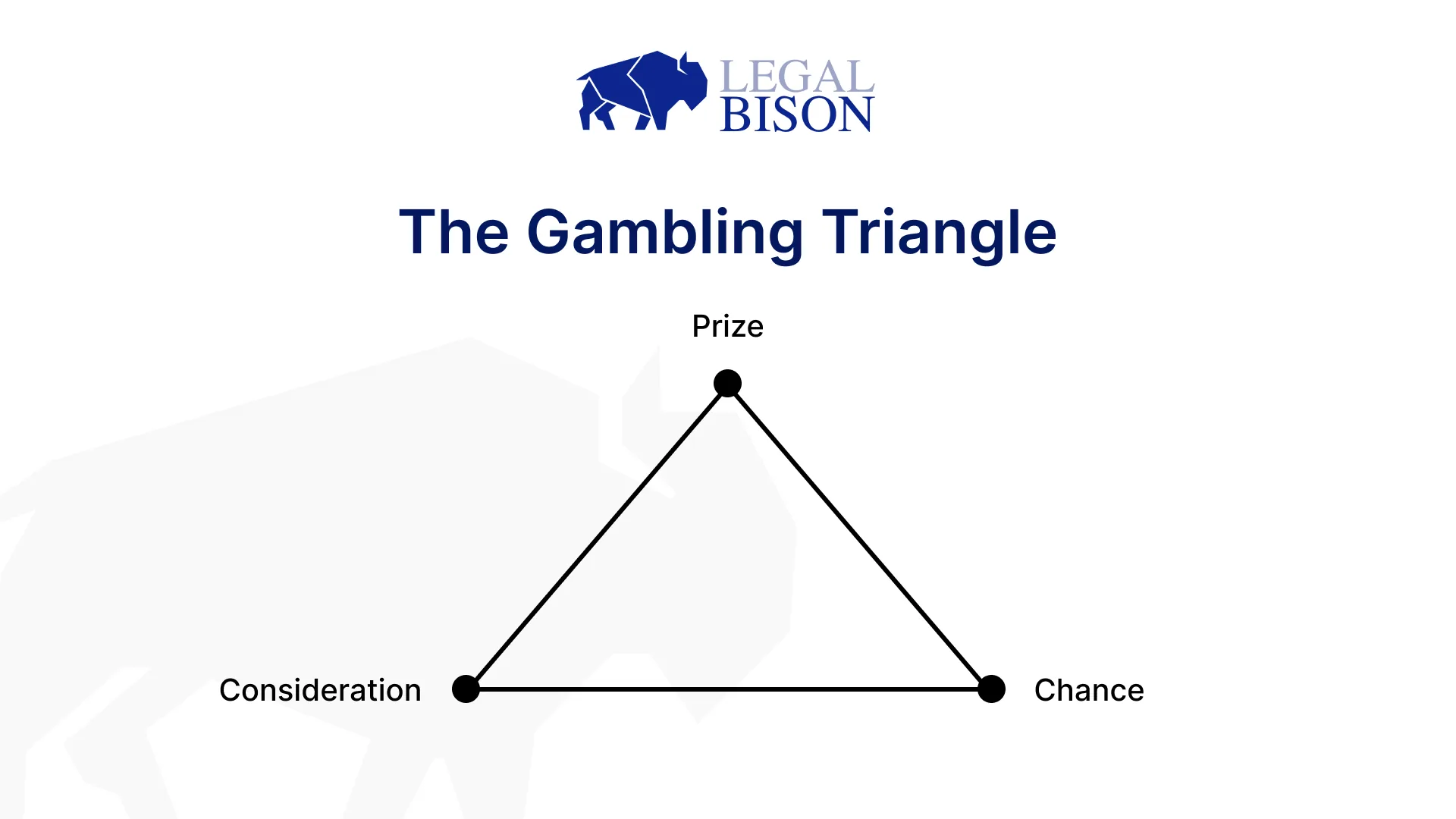
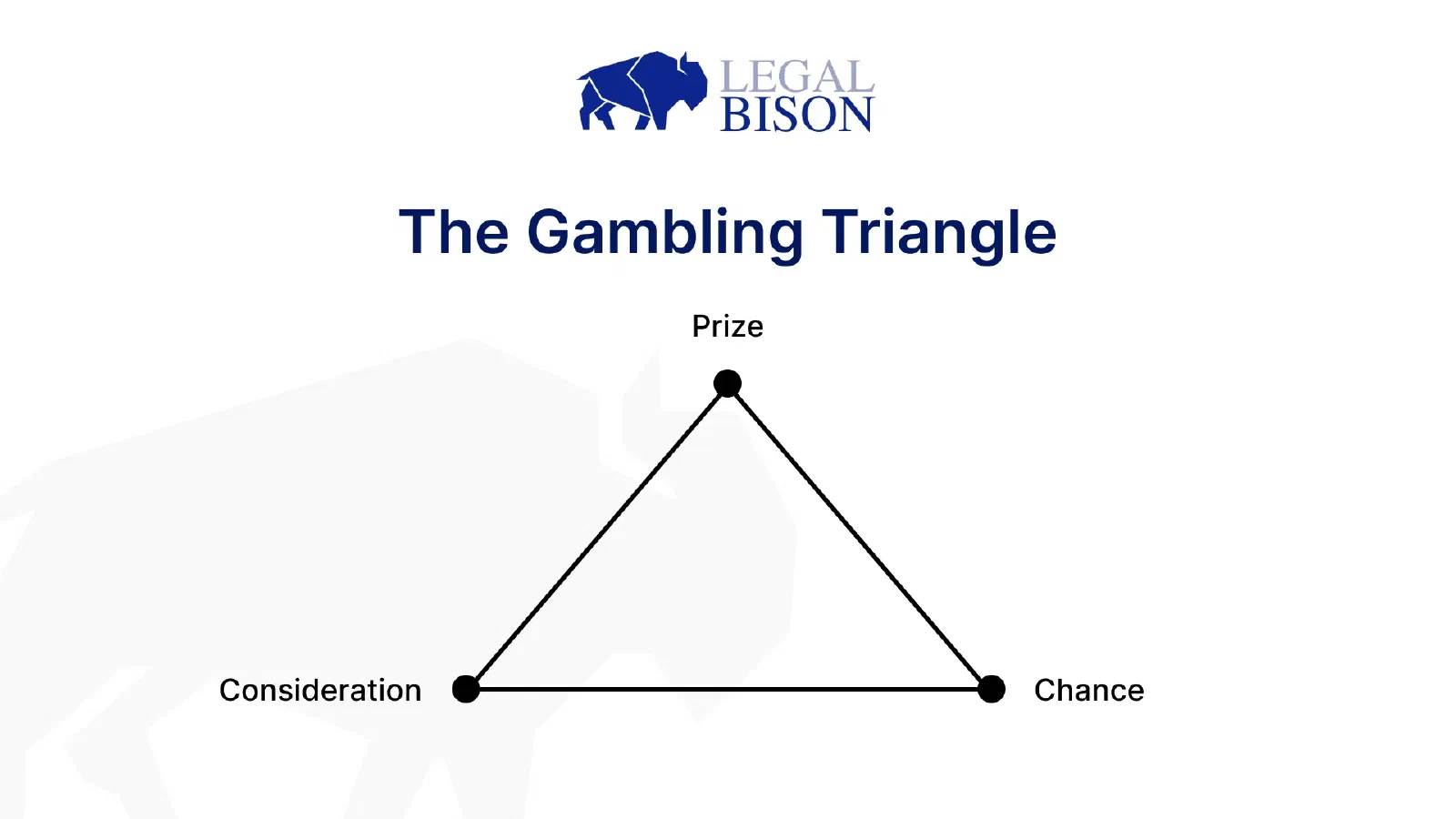
Every US state defines illegal gambling around the same basic elements: prize, chance, and consideration. Take any one of those out, and the activity generally falls outside gambling law. Sweepstakes casinos are built entirely around removing consideration, which is the legal term for something of value paid to enter.
That’s where the dual-currency model comes from, and it’s not a marketing gimmick. It exists specifically to satisfy the test.
Gold Coins are the purchasable currency; they carry no redeemable value and exist purely for entertainment play. Sweeps Coins are the currency that can be redeemed for cash prizes, and critically, they cannot be bought directly.
Players either get them free with a Gold Coin purchase, as a bonus rather than a sale, or they get them through an Alternate Method of Entry, commonly called an AMOE.
The AMOE is doing real legal work. It’s typically a mail-in request, sometimes a form on the site, that gives a player Sweeps Coins without spending a dollar.
What matters legally is what regulators call “equal dignity”: the free path has to function as a genuine, unburied, equally viable way to get the same Sweeps Coins a paying customer receives.
An AMOE that technically exists but is slow, hidden, or capped in a way that the purchase path is not will give you a defense on paper but a liability in practice.
Also read: When Does an In-Game Virtual Money Trigger a License?
The line that often trips operators
The mechanic we see cause the most trouble is the bundling. A Gold Coin purchase that quietly hands over a “bonus” pack of Sweeps Coins as part of the same transaction starts to look, functionally, like buying entries with money.
Regulators look at the substance of a transaction rather than what the receipt says it was for. If the practical effect of paying is receiving more chances to win, the “free” label on the Sweeps Coins stops doing the legal work it’s supposed to do.
Redemption thresholds cause a similar problem from the other direction. A platform that makes winning easy but cashing out requires players to accumulate an unusually high balance, or jump through complications that don’t exist on the purchase side, starts to look like the free path was never meant to be equally usable.
That asymmetry is exactly the kind of fact pattern state regulators point to when they argue that a “sweepstakes” platform is functioning as a gambling operation in every way that matters except the label on the terms page.
Once a platform gets read as gambling instead of sweepstakes, the exposure doesn’t stay contained to the operator. Payment processors that touched the transactions can face their own scrutiny for facilitating unlicensed gambling activity, which is part of why several major processors have quietly pulled back from this sector in states where the legal footing has gotten shaky.
Affiliates who promoted the platform can be pulled into state inquiries too, particularly where marketing language leaned into “real money” and “cash prizes” language that undercuts the sweepstakes framing.
The player rarely comes out ahead in this scenario, either. Someone who genuinely believed they were playing a free promotional game can find their winnings frozen or their account closed the moment a platform pauses operations in response to regulatory pressure. Most people entering this space assume the operator carries all the risk.
In practice, the liability spreads to everyone who touched the transaction chain, and the player is usually the last to find out.
Also read: How to Start an Online Casino That Accepts Real Money Wagers
How other jurisdictions approach the same test
The US framework provides the clearest template, but the sweepstakes-versus-gambling question looks different once you leave the country.
In the UK and much of Europe, the distinction is governed by gambling licensing regimes rather than state lottery statutes. A sweepstakes-style platform that avoids consideration under US law may still require a license under the UK Gambling Commission’s framework if the activity is deemed to be “facilitating gambling” in practice. The test is less about whether players pay to enter and more about whether the overall experience resembles a gambling product in substance.
Canada presents a different wrinkle. While the federal framework mirrors the US prize-chance-consideration test, Quebec imposes additional registration requirements on any promotion that reaches its residents, and a skill-testing question is often required to bypass lottery restrictions entirely. Operators who structure their AMOE to satisfy US regulators often find that Quebec’s rules catch them off guard, because the province treats even free-entry sweepstakes as subject to its own oversight.
Australia and New Zealand take yet another approach. Trade promotions that involve an element of chance, even without consideration, can still trigger state-based permit requirements if the prize value exceeds a relatively low threshold. We have reviewed several platforms that assumed their “free entry” language insulated them from regulation, only to discover that the local authorities define “consideration” more broadly or impose filing deadlines that don’t align with a typical US launch calendar.
We treat these jurisdictional divergences as a core part of the risk assessment, not an edge case. A platform that clears US law comfortably can still face fines, takedown orders, or license requirements elsewhere. The dual-currency model is a sound starting point, but it needs to be stress-tested against the specific rules of each market you actually operate in.
What we’d check first
If someone handed us a new mechanic tomorrow, a new coin structure, or a loyalty program with a chance element bolted on, we would start with one question: strip away the marketing copy, does money paid still functionally purchase a better chance at winning something? If yes, no amount of dual-currency structuring fixes that on its own.
From there, we’d trace the AMOE path the way a regulator would, timing how long it takes and checking whether it’s genuinely discoverable rather than buried. The free path needs to yield the same odds as the paid path, not a token allocation that exists on paper only. We’d also check redemption terms for asymmetry, whether it’s easier to deposit than it is to cash out.
A mechanic that holds up under all of that tends to survive review. One that doesn’t usually falls apart, no matter how carefully the terms page is worded.
Two mechanics, two outcomes
Consider two structural choices side by side, and the pattern becomes obvious. A platform that gives every player, paying or not, a genuinely equal shot at Sweeps Coins through a clearly signposted AMOE, with matching redemption terms across both paths, tends to read as a real sweepstakes.
The engagement-for-rewards model that platforms like watch.fun have explored, where users earn entry currency through activity rather than payment, sits in a similar category: the chance element stays intact, but consideration never enters the picture because nothing of value changes hands to participate.
Now compare that to a platform where the free AMOE technically exists but requires a physical mailed request with a two-week processing window, while the purchase path delivers Sweeps Coins instantly and in far larger quantities.
Both platforms can use identical marketing language. Only one of them would survive a regulator tracing the actual mechanics back to the legal test.
The landscape is not standing still
Regulators in different states are not reading these mechanics the same way right now, and that gap is widening rather than closing. A structure that draws no attention in one state can trigger an inquiry in another, and a mechanic that was fine last year can get flagged this year as more states scrutinize the sector following high-profile enforcement actions elsewhere.
New Jersey, for example, has introduced legislation that would effectively prohibit the sweepstakes model of wagering and establish new penalties for unlawful gambling operations.
Louisiana’s Attorney General has issued formal opinions stating that online sweepstakes casinos should be considered illegal in the state. And state attorneys general from Michigan, Connecticut, Delaware, and Washington have all issued cease-and-desist letters to sweepstakes casinos.
Compliance here is jurisdiction-specific and time-limited: what’s defensible depends on the states you’re operating in, and it needs reviewing regularly as the landscape shifts.
That review process, from checking mechanics against the legal test, confirming the AMOE holds up as a genuinely equal path, and mapping exposure state by state is exactly the kind of engagement we run at LegalBison for operators building or auditing sweepstakes-style platforms, including structuring compliant online raffles from the ground up rather than retrofitting compliance onto a mechanic that was never built with the test in mind.