List of Popular Crypto Projects in Ireland and How to Launch Your Own
The EU’s Markets in Crypto-Assets Regulation (MiCA) has fundamentally altered the digital asset landscape. We have moved from the Wild West of unregulated Initial Coin Offerings (ICOs) to a structured, transparent, and legally certain environment.
At the heart of this transformation sits Ireland. With a reputation as a global FinTech hub, a rigorous regulator in the Central Bank of Ireland (CBI), and a legal system rooted in common law, Ireland has rapidly become the jurisdiction of choice for major crypto-asset issuers and service providers seeking access to the European Single Market.
Adrien MarchandAssociate at LegalBison
Mar, 06 202611 minutes
According to the Interim MiCA Register, which tracks notifications to National Competent Authorities (NCAs), Ireland is currently facilitating the entry of numerous high-profile projects into the EU. For entrepreneurs and established web3 companies, analyzing who is choosing Ireland, and why, provides a blueprint for a successful token launch.
This article explores six notable entries submitted to the Central Bank of Ireland, dissects the regulatory advantages of the Irish jurisdiction, and outlines the roadmap for launching your own MiCA-compliant token.
Why the Giants Choose Ireland: The Regulatory Advantage
Before examining specific projects, it is crucial to understand the magnetic pull of Ireland for the crypto industry. Ireland has integrated the MiCA framework through the European Union (Markets in Crypto-Assets) Regulations 2024, designating the CBI as the competent authority.
The decision to issue a token in Ireland is rarely accidental; it is a strategic calculation based on several key factors:
The EU Passporting Right: A token authorized or notified in Ireland can be legally offered to the entire European crypto market, over 450 million consumers, without further licensing in other member states. This passport is the crown jewel of MiCA compliance;
Credibility and Stability: The CBI is known for its high standards. It does not permit brass-plate operations (shell companies). Securing a notification or authorization here signals to investors and partners that the project has substance, robust governance, and fit and proper management;
Common Law System: Ireland is the only English-speaking common law jurisdiction in the EU (post-Brexit). This legal framework is favored by international businesses, particularly those from the US, for its predictability and commercial focus;
Tech Ecosystem: Ireland hosts the European headquarters of many of the world’s largest technology and financial firms, creating a sophisticated ecosystem of legal, technical, and compliance talent essential for crypto issuance.
For a deeper dive into the specific benefits of this jurisdiction, you can explore our detailed service on MiCA Token Issuance in Ireland.
Notable Projects Notified to the Central Bank of Ireland
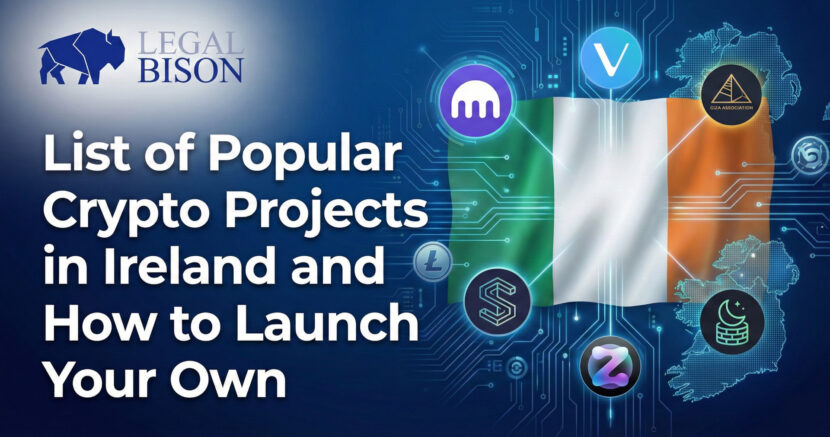
Data from the Interim MiCA Register (OTHER.csv) reveals a diverse array of projects interacting with the Irish regulator. These entries range from established Layer-1 blockchains to innovative DeFi protocols and AI-driven platforms.
1. VeChain Foundation
The Project: VeChain is a prominent enterprise-grade blockchain platform focused on supply chain management and sustainability. The notification in the register points specifically to the B3TR token, associated with the VeBetterDAO ecosystem.
Activity: The project focuses on incentivizing sustainable actions and transparent data management.
MiCA Classification: The B3TR token is notified as a crypto-asset under Title II (Other Crypto-Assets). It functions as a utility token, creating a reward mechanism within their ecosystem.
Why Ireland: Despite the Foundation being based in San Marino (a non-EU state), they chose Ireland for their MiCA notification. This highlights Ireland’s role as a gateway for non-EU entities to compliantly access the European market.
2. Kraken
The Project: Kraken is one of the world’s longest-standing and most secure crypto exchanges. In the register, Payward appears frequently, not just as a venue, but as the notifying entity for various white papers.
Activity: Under MiCA, if a token issuer does not publish a white paper (often because they are decentralised or non-EU based), the trading platform (Crypto-Asset Service Provider or CASP) must publish the white paper to list the token legally.
MiCA Classification: Kraken acts as the notifier for tokens that fall under “Other Crypto-Assets.” They ensure that assets admitted to their trading platform comply with transparency requirements.
Why Ireland: Kraken has a significant operational base in Ireland. By leveraging their Irish entity to notify white papers, they can list tokens across their European platform, ensuring continuous liquidity for EU customers while strictly adhering to CASP obligations under MiCA Title V.
3. Giza Association
The Project: Giza is an emerging protocol at the intersection of Artificial Intelligence and Blockchain (ZKML – Zero-Knowledge Machine Learning).
Activity: Giza allows developers to deploy AI models on-chain in a trustless manner. The notification concerns the GIZA protocol token.
MiCA Classification: Classified as “Other Crypto-Assets” (Title II), this is likely a utility token used to access the computational resources and governance of the AI protocol.
Why Ireland: For cutting-edge tech projects like Giza, Ireland’s reputation as a technology hub is vital. The notification allows them to market their token to European developers and users who are increasingly focused on the convergence of AI and Web3.
The Project: Subspace is a fourth-generation blockchain designed for scalability and storage, often referred to as an “Internet-scale” computer.
Activity: The project aims to resolve the bloat in blockchain history, allowing for massive scalability. The notification is for the AI3 token.
MiCA Classification: As a token powering a network’s infrastructure, this falls under Title II “Other Crypto-Assets.” It serves a utility function for consensus and storage payments.
Why Ireland: Subspace, often associated with Swiss foundations (common in the pre-MiCA era), is utilizing the Irish framework to ensure their token can be publicly offered and traded within the EU, securing their place in the regulated European market.
5. Zora Labs
The Project: Zora is a decentralized protocol where anyone can buy, sell, and create non-fungible tokens (NFTs). It is also a Layer 2 blockchain solution built on Ethereum.
Activity: Zora focuses on creator tools and infrastructure. The notification relates to their ecosystem token.
MiCA Classification: While NFTs themselves are often excluded from MiCA if they are unique and non-fungible, tokens issued by the platform for governance or utility (if fungible) fall under Title II “Other Crypto-Assets.”
Why Ireland: As a US-based entity (Inc.), Zora Labs utilized the notification mechanism to ensure their asset is compliant for EU trading. Ireland serves as the bridge between American innovation and European regulation.
6. Moonwell Foundation
The Project: Moonwell is an open lending and borrowing DeFi protocol built on Moonbeam and Moonriver.
Activity: It allows users to supply assets to earn rewards or borrow assets against collateral. The notification concerns the WELL token.
MiCA Classification: The WELL token acts as a governance and utility token for the protocol, placing it in the “Other Crypto-Assets” category (Title II).
Why Ireland: DeFi protocols face complex regulatory questions. By submitting a white paper to the CBI, Moonwell signals a commitment to compliance, distinguishing itself from unregulated DeFi projects that may face bans or restrictions on EU exchanges.
The projects listed above range from AI startups to global exchanges, but they all followed a structured path to compliance. If you intend to launch a token in the EU, understanding this process is mandatory.
For a broader view of the European landscape, you can consult our service on MiCA Token Issuance.
Step 1: Precise Classification
Before you incorporate a company in Ireland or write a line of code, you must determine what your token is legally. MiCA is not a one-size-fits-all regulation; it has three distinct buckets:
Asset-Referenced Tokens (ARTs): These are tokens that purport to maintain a stable value by referencing a basket of currencies, commodities, or other crypto-assets. Issuing an ART requires a full authorization (license) from the CBI, robust capital requirements (min. €350,000), and strict reserve management;
E-Money Tokens (EMTs): These are tokens that reference a single official currency (like a Euro stablecoin). To issue an EMT, you generally must be a licensed Electronic Money Institution (EMI) or a Credit Institution (Bank);
Other Crypto-Assets: This is the category for Utility Tokens and most ecosystem tokens (like the examples above). These tokens do not purport to maintain a stable value. They require a notified White Paper but not an ex-ante authorization (license).
For detailed assistance on navigating these definitions, please visit our MiCA Regulation page.
Step 2: Corporate Structure and Substance
You cannot issue a MiCA-compliant token from a DAO or a decentralized void. You must be a legal person.
Incorporation: You will likely incorporate a Private Limited Company (LTD) or Designated Activity Company (DAC) in Ireland;
Substance: The Central Bank of Ireland requires real presence. You cannot simply have a PO Box. You need local directors, a physical office, and demonstrable mind and management within the country.
Many companies, as we see in the ESMA registry, have their company registered outside of the EU. Their corporate structure is found in classical offshore hubs like BVI, Cayman Islands, Panama and others, from which they can legally issue a token and then notify the regulator in Ireland. No obligation to set-up a new legal entity: use your existing ones and get quick access to the full EU market.
See for example the whitepaper of Suku World, that LegalBison proudly assisted to notify to the CBI. This incidentally also demonstrates that not only your company can be registered outside of Ireland and the EU, but your legal partner as well, as long as it has a full comprehension of the requirements of the MiCA regulation and the expectations of the competent authority.
The White Paper is no longer a marketing brochure; it is a liability document similar to a prospectus. It must be fair, clear, and not misleading. Key requirements include:
Detailed Project Info: Identity of the offeror, issuer, and operator;
Rights and Obligations: What does the token actually do? What rights does the holder have?
Risks: A comprehensive disclosure of risks associated with the issuer, the crypto-asset, and the technology;
Environmental Impact: Disclosures regarding the consensus mechanism’s adverse climate impacts.
Crucially, for “Other Crypto-Assets,” this document is not approved by the regulator but is notified to them. However, the regulator has the power to suspend the offer if the white paper is non-compliant.
Step 4: Notification to the Central Bank of Ireland
Once your entity is set up and your White Paper is drafted:
Submission: You must notify the white paper to the CBI at least 20 working days before publication;
Review: The CBI may review the document. While they do not formally approve utility token white papers, they ensure all required information is present;
Publication: After the notification period, you must publish the white paper on your website;
Register: Your white paper will effectively be listed in the ESMA register (as seen in the OTHER.csv file), granting you the right to market the token across the EU.
Step 5: Post-Issuance Compliance
Compliance does not end at issuance. You must:
Marketing Communications: Ensure all marketing is consistent with the white paper and clearly identifiable as marketing;
Consumer Rights: For retail holders, there is a mandatory 14-day right of withdrawal for tokens bought directly from the issuer, unless the token is admitted to trading before purchase;
Ongoing Conduct: Act honestly, fairly, and professionally, and manage conflicts of interest.
For ongoing support strategies, refer to our MiCA Compliance services.
The projects submitting to the Central Bank of Ireland, from VeChain to Zora Labs, demonstrate that the industry is maturing. They are choosing certainty over ambiguity and access over isolation. Ireland provides the infrastructure, the regulatory clarity, and the global reputation necessary to support this transition.
However, navigating the specific requirements of the CBI, drafting a compliant White Paper, and ensuring local substance can be daunting for a web3 project focused on technology.
LegalBison is here to bridge that gap. As legal experts specialized in the FinTech industry, we can assist entrepreneurs and companies with the whole process of registration, token issuance, and compliance. Whether you need to determine if your token is an ART, EMT, or Utility Token, set up your Irish corporate structure, or draft a watertight MiCA White Paper, our team has the expertise to guide you.
Don’t let regulatory complexity stall your innovation. Contact LegalBison today to ensure your project is built on a foundation of compliance and ready for the European stage.
Within the MiCA framework, Ireland has emerged as a premier jurisdiction for issuance, offering a sophisticated financial ecosystem, a common-law legal system, and a regulator, the Central Bank of Ireland (CBI), that is both rigorous and proactive.
LegalBison will break down and explain the main differences between the variety of crypto licensing frameworks, such as VASP, DASP, and CASP, so you won’t lag behind competitors in the cryptocurrency industry.
Anastasia MarchenkoLegal Researcher at LegalBison
Contact Us
LegalBisonExperts & FinTech Lawyers
LegalBison’s experts and FinTech lawyers will glady invite you to a free consultation.