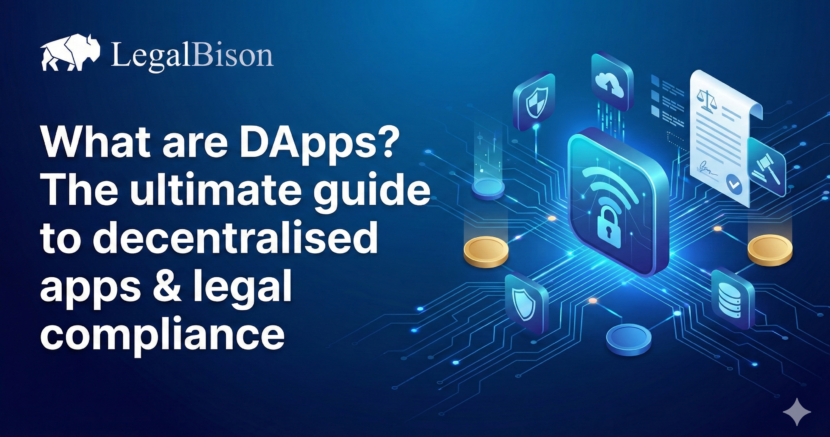
What Are DApps? The Ultimate Guide to Decentralised Apps & Legal Compliance
Decentralized applications represent a shift from centralized corporate servers to peer-to-peer blockchain networks that prioritize user autonomy and system resilience. This guide explores the technical architecture of these platforms and the essential legal structures required to maintain global compliance in the 2026 regulatory environment.
Anastasia MarchenkoLegal Researcher at LegalBison
Feb, 25 20269 minutes
The digital landscape is undergoing a fundamental transformation as we move from the era of centralised platforms to a distributed web. At the heart of this shift is the decentralised application, or DApp. While traditional applications rely on a handful of tech giants to host data and facilitate transactions, DApps operate on a peer-to-peer network of computers. This architecture removes the single point of failure that has plagued the internet for decades.
A DApp is defined as a software system that runs on a distributed network rather than a centralised server. It is characterised by its resilience, as no central authority can shut it down or censor its content. Unlike your banking app or social media profile, which resides on a private server owned by a corporation, a DApp exists across a global network of nodes. This decentralisation ensures that the application remains accessible as long as the underlying blockchain is active.
At LegalBison, we see DApps as more than just a technical curiosity. They represent a new way of conducting business, managing assets, and governing communities. In this guide, we explore how DApps function, their real-world utility, and the critical legal frameworks you must navigate to launch a compliant project.
How do DApps work?
To understand a DApp, one must look under the hood at its architecture. While a standard web application consists of a frontend (what you see) and a backend (the server and database), a DApp replaces the centralised backend with blockchain technology.
Smart contracts
The backend logic of a DApp is usually composed of smart contracts. These are self-executing pieces of code that live on a blockchain like Ethereum, Solana, or Base. Smart contracts enforce the rules of the application automatically without the need for human intervention. For instance, in a decentralised lending DApp, the smart contract ensures that a borrower provides enough collateral before a loan is issued. Because the code is immutable, neither the developer nor a third party can alter the terms once the contract is deployed.
Frontend user interface
Despite the complex technology running in the background, the frontend of a DApp often looks like any other website. Users interact with the application via standard web interfaces or specialised DApp browsers. To bridge the gap between the user and the blockchain, tools like MetaMask, Trust Wallet, or Coinbase Wallet are used. These wallets sign transactions and allow the user to authenticate their identity without sharing a password. This ensures that the user maintains full control over their digital assets at all times.
Data storage
Traditional apps use centralised providers like AWS or Google Cloud to store user data and media files. DApps often take a different route by utilizing decentralized storage solutions. Platforms such as IPFS (InterPlanetary File System) or Arweave ensure that data is distributed across the network. This prevents data loss and ensures that information remains immutable. By combining smart contracts for logic and decentralised storage for data, a DApp becomes a truly sovereign entity.
Key features & benefits
The rise of DApps is driven by several core advantages that traditional centralised applications simply cannot match. These features provide a level of security and autonomy that is increasingly valued in the digital economy.
Decentralisation: No central authority controls the data or has the power to shut the system down;
Transparency & immutability: All transactions and code execution are recorded on a public ledger, making them verifiable by anyone at any time;
Automation: Smart contracts eliminate the need for intermediaries, which reduces costs and speeds up processes in sectors like insurance or supply chain management;
Censorship resistance: Because the application is spread across thousands of nodes, it is nearly impossible for any single government or entity to block access to it.
DApps’ real-world use cases beyond trading
While many people associate DApps primarily with cryptocurrency trading, the technology has matured significantly. We are now seeing DApps applied to complex industrial and social problems where trust and transparency are paramount.
DeFi (decentralised finance)
DeFi remains the most prominent sector for DApps. It involves lending, borrowing, and decentralised exchanges like Uniswap. By removing the traditional bank, DeFi DApps allow users to earn higher yields and access credit more easily. However, it is also the most heavily regulated sector. Regulators are increasingly focusing on the financial stability risks posed by these protocols, making legal compliance a priority for developers.
DAOs (decentralised autonomous organisations)
A DAO is a DApp that facilitates collective governance and fund management. Instead of a traditional board of directors, a DAO uses tokens to allow members to vote on proposals. This model often faces a trilemma of autonomy versus efficiency versus legal certainty. Without a proper legal wrapper, DAO members can be held personally liable for the organisation’s actions. Protecting members from such liability is one of the primary services we provide at LegalBison.
Supply chain & healthcare
In the supply chain, DApps are used to trace the provenance of goods. For example, systems like IBM Food Trust allow consumers to verify where their food came from and how it was handled. In healthcare, DApps offer a way to secure patient data while allowing for interoperability between different providers. Patients can control their own medical records, granting access to doctors only when necessary, which enhances both privacy and data security.
Identity
Self-sovereign identity is a growing field where DApps allow users to control their own credentials. Instead of relying on a centralised provider like Google or Facebook, DApp users can present cryptographically signed proofs of their identity. This reduces the risk of identity theft and puts the power back into the hands of the individual.
Why you need a professional approach
Building a DApp is not just a technical challenge; it is a strategic one. As the industry moves into 2026, the era of experimental DApps is over. Investors and users now expect a professional level of service, security, and scalability.
Scalability
Early DApps struggled with bottlenecks and high gas fees on networks like Ethereum. During periods of high traffic, a simple transaction could cost a fortune. Today, solutions like ZK Rollups (Layer 2) are solving these issues. These technologies bundle transactions together and process them off-chain before settling them on the main network. This increases throughput and slashes costs, making DApps viable for mass adoption.
Security
Security is the biggest hurdle for any DApp. Vulnerabilities in smart contracts have led to the loss of billions of dollars. Unlike traditional software, where a bug can be patched instantly, immutable code means that a mistake is permanent. Professional audits and rigorous testing are non-negotiable for any serious project.
Regulatory uncertainty
DApps are global by nature, but laws remain stubbornly local. A developer in Europe might be providing services to users in the United States, Asia, and the Middle East simultaneously. Navigating this landscape requires an understanding of how different jurisdictions view virtual assets and decentralised protocols.
How to launch a compliant DApp
The mantra of code is law has often been used to argue that DApps should be exempt from traditional regulations. However, global regulators like the Financial Stability Board (FSB) and the European Securities and Markets Authority (ESMA) have made it clear that they are scrutinising DeFi and DApps for financial stability risks. Launching a DApp today requires a robust legal strategy.
The myth of code is law
While the code may execute automatically, the people behind the code are still subject to the laws of their physical location. Regulators do not care if a service is run by a smart contract or a human; if it performs the functions of a bank or an exchange, it will be treated as such. Understanding this reality is the first step toward building a sustainable business.
Why you need a corporate structure
Operating a DApp without a legal entity is a significant risk. If your project is considered a general partnership because it lacks a formal structure, the founders and even the token holders could be held personally liable for the project’s debts or legal violations.
Liability protection: Setting up an LLC or a Foundation creates a legal wrapper that protects your personal assets;
Regulatory compliance: If your DApp handles user funds, you likely need a VASP (Virtual Asset Service Provider) or a crypto license. This is necessary to access banking services and avoid being shut down by authorities;
Token issuance: If your DApp has a native token, you must determine if it is classified as a security. A legal opinion from a qualified professional is necessary to avoid hefty fines from the SEC or other regulators.
Global formation
Selecting the right jurisdiction is one of the most important decisions you will make. Different countries offer different advantages depending on your DApp’s function. Switzerland is known for its Crypto Valley and clear rules for foundations. The UAE offers a tax-efficient environment for digital innovation. Panama and the BVI provide flexibility for decentralised projects. LegalBison helps you navigate these options to find the perfect home for your project.
Conclusion
DApps represent the future of digital interaction, offering a level of transparency and user empowerment that was previously impossible. However, the path to innovation is paved with legal complexities. From smart contract security to global regulatory compliance, the stakes have never been higher.
At LegalBison, we specialise in bridging the gap between cutting-edge technology and the legal world. Whether you are launching a DeFi protocol, a DAO, or a supply chain solution, our team provides the corporate structures and licensing expertise needed to succeed on a global scale.
Don’t let legal hurdles stop your innovation. Contact LegalBison today to structure your DApp, DAO, or DeFi project for global compliance and success.
FAQ
What is the main difference between an app and a DApp?
The main difference is where the application is hosted. A traditional app runs on centralised servers owned by a single company, while a DApp runs on a decentralised blockchain network. This makes DApps more resistant to censorship and outages.
Are DApps legal?
Yes, DApps are legal, but they must comply with the laws of the jurisdictions in which they operate. This often includes anti-money laundering (AML) regulations and financial licensing requirements, especially for DeFi applications.
What is a VASP license?
A Virtual Asset Service Provider (VASP) license is a regulatory requirement for businesses that provide services related to digital assets, such as exchanges or wallet providers. It ensures that the business follows standard financial rules to prevent fraud and money laundering.
Do I need a company for my DAO?
Yes, it is highly recommended. Without a legal entity like a Foundation or an LLC, DAO members may face unlimited personal liability for the actions of the organisation.
With the implementation of the Markets in Crypto-Assets (MiCA) Regulation and the national Digital Finance Act (Act No. 31/2025 Coll.), the Czech Republic has transitioned from a simple registration-based system to a sophisticated licensing regime. The evolving regulatory landscape for crypto companies in the Czech Republic and the EU is shaping new opportunities and compliance requirements for market participants.
The passing of the Markets in Crypto Assets (MiCA) Regulation in the EU changes the classification of cryptocurrencies. European lawmakers now distinguish three categories of crypto-assets: Asset-Referenced Tokens (ART), Electronic Money Token (EMT) and a third category that includes all assets not falling into the two first classes. LegalBison's lawyers dive into details in this article.
Anastasia MarchenkoLegal Researcher at LegalBison
Contact Us
LegalBisonExperts & FinTech Lawyers
LegalBison’s experts and FinTech lawyers will glady invite you to a free consultation.