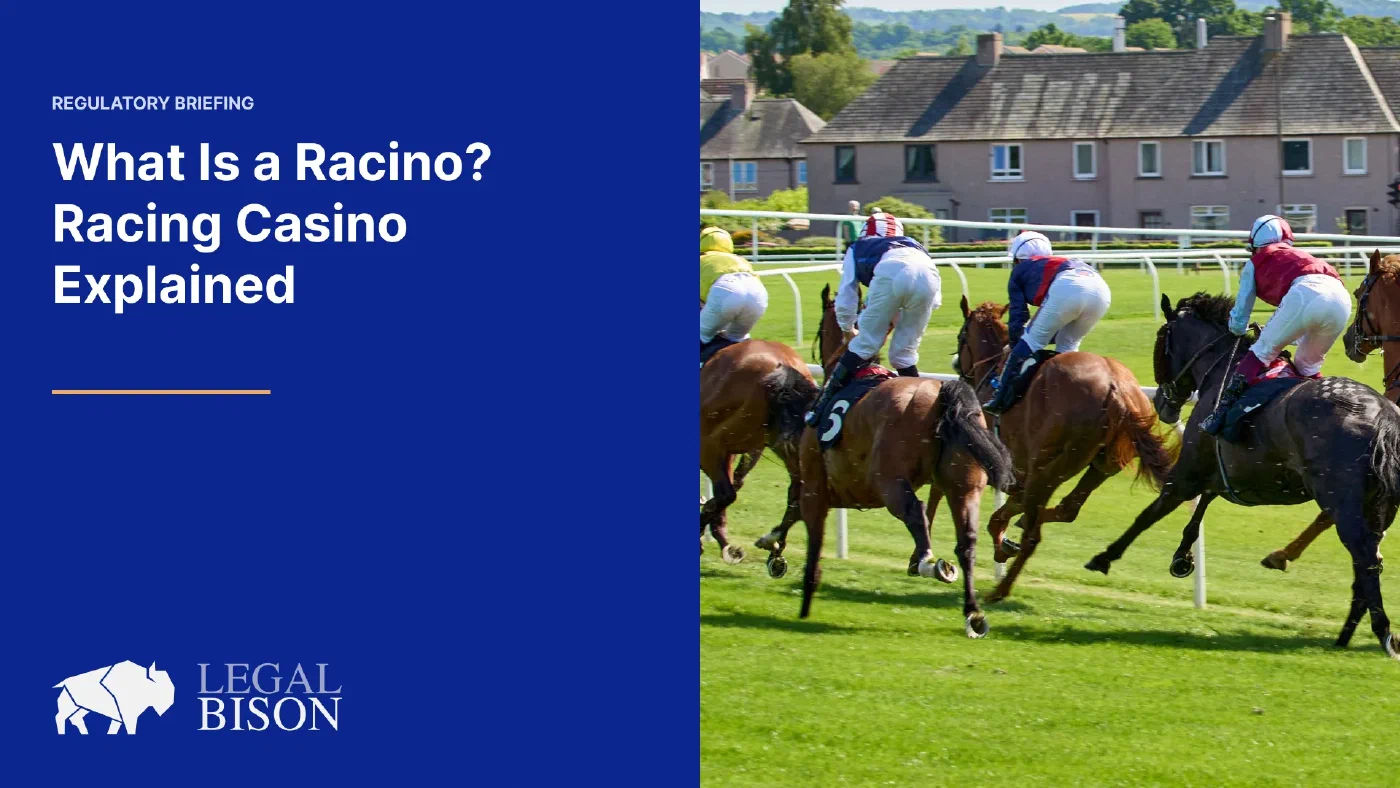
People tend to picture it as a casino with a track attached, or a track that happens to have slot machines. Once you look at how the licenses are actually structured, neither picture holds up.
We have sat across from clients who assumed their casino license was self-contained, only to find out midway through a deal that it was legally chained to a live-racing calendar they had no interest in running.
We have also watched an advisor scope a licensing engagement as a straightforward commercial casino matter, in a state where the gaming authorization does not exist independently of the racing one. Both mistakes come from the same place: treating a racino like a casino with a theme.
So, this is not a definition piece. A definition tells you that a racino combines racing and gaming. What actually matters is where the two obligations pull apart, what breaks when someone ignores that, and what it takes to get the structure right before it becomes a problem instead of a footnote.
Also read: Difference Between Racino vs. Casino
Two licenses under one roof
A racino exists because a state needed a political and fiscal compromise. Horse and greyhound racing had been losing money and audience for decades. Casino gaming generated exactly the kind of tax revenue legislatures wanted. Rather than let racing die and gaming stand alone, several states fused the two: keep the track operating, and in exchange, let the operator run slots or table games on the same property.
That compromise did not create one hybrid license. In most racino states, it created two license regimes sitting inside the same building, often answering to two different oversight bodies, each with its own obligations.
The racing license usually comes with a minimum live-race-day requirement, licensing conditions tied to breed associations or horsemen’s groups, and purse funding rules. The gaming license runs on its own reporting cycle and its own regulator relationship. Statute bolts the two together; it doesn’t merge them into one clean framework.
West Virginia shows how literal that bolt can get. State law requires racetrack casinos to route a defined share of gaming revenue directly into racing purses. That’s a binding financial link between the two licenses. Pull that funding mechanism, and you are rewriting the deal the license was built on.
Also read: We Round-up 7 of the Most Successful Web3 Casino Platforms and How They Get Licensed
What operators miss when they treat it like a single casino license
The details that trip people up are rarely dramatic on their own. A purse contribution formula gets overlooked, or a race-day minimum is written into the racing statute rather than the gaming one. Add two regulators expecting compliance reports on different calendars, and the paperwork alone can stall a deal that looked simple on paper.
None of this shows up as a red flag on day one. It shows up during a track relocation or an ownership transfer, exactly when an operator or advisor least wants to discover it.
We have seen the cost of ignoring that gap play out in a smaller, quieter way, too. A client came to us confident that their casino gaming license was fully transferable in an acquisition.
What they hadn’t accounted for was the racing component, which required its own regulatory sign-off tied to the specific operator’s fitness to run live events, apart from anything the gaming side needed. That gap alone added months to a deal everyone had priced as a straightforward transfer.
Where racing obligations end, and gaming obligations start
Here is the working knowledge that separates someone who understands racinos from someone who has just heard the term: the racing obligation is usually the older, more rigid piece, written to preserve an existing industry.
The gaming obligation is the newer, more flexible piece, written to attract investment. When a state expands what its racinos can offer, the expansion almost always runs through the gaming side first.
That matters directly for anyone eyeing online casino gaming. In several jurisdictions, the ability to offer an online gambling license or authorize an iGaming product runs through the existing land-based license rather than a separate application.
A racino that already holds its casino authorization may be sitting on the fastest path to an online casino license in that state, because the statute treats the online product as an extension of the existing gaming footprint rather than a new license category.
An advisor who doesn’t know that will send a client through a licensing process from zero when a faster route already sits inside the license the client holds.
The fight over decoupling isn’t over
Florida keeps revisiting whether tracks need to run live races to keep their casino licenses. West Virginia’s purse-funding mandate faces its own periodic budget pressure in the legislature.
The pattern worth watching is the balance of who needs whom. When the racing side can no longer show it needs protection, expect renewed pressure to cut it loose. When a state’s gaming expansion needs the racing lobby’s political support to pass, expect the obligation to hold a little longer.
That tension is structural, and it will keep resurfacing under whatever headline happens to carry it next.
Also read: What Is a Prediction Market? Behind the Trend, How These Platforms Work and Make Profits
What this means if you’re structuring one
If you are structuring a racino acquisition, launching a new gaming operation on an existing track, or advising a client who assumes their casino license stands alone, the fix is jurisdiction selection and licensing strategy that account for both regimes from the start.
At LegalBison, our licensing team works with operators across gaming and gambling licensing to map out where a target jurisdiction’s gaming obligations diverge, what dual-regulator reporting actually requires in practice, and whether an existing land-based footprint can reach an online gambling license faster than starting fresh. That regulatory compliance work is easiest to get right before a deal closes.