One of the most common misunderstandings we run into when advising clients in the gaming space is the assumption that social casino and sweepstakes casino mean the same thing while they’re actually not the same.
Conflating them creates real legal and commercial consequences for operators who build the wrong model for the wrong market.
Social casinos are for entertainment only. You play games like slots or poker using virtual credits that have no real-world value; you cannot win money or trade these credits for anything. If you run out, you can buy more or wait for free refills.
Sweepstakes casinos are different because they use two types of currency. One is for fun play, like a social casino. The other can be traded for prizes like cash or gift cards. You can get this second currency for free, or as a bonus when buying play-money credits. While some operators use the terms interchangeably to sound friendlier, structurally they are different products with different legal rules.
But structurally, they are not the same product. When we are advising an operator, our first question is always:
Does your secondary currency have real-prize redemption?
If yes, we are in sweepstakes territory, and the entire legal and operational picture shifts accordingly.
Related: How to Start a Bitcoin Casino From Product, Licensing, to Off-Ramping
The legal mechanism that makes this possible
How does a platform let you play slot games in a state like Texas or Utah, which are some of the states with tight gambling restrictions without holding a commercial gambling license?
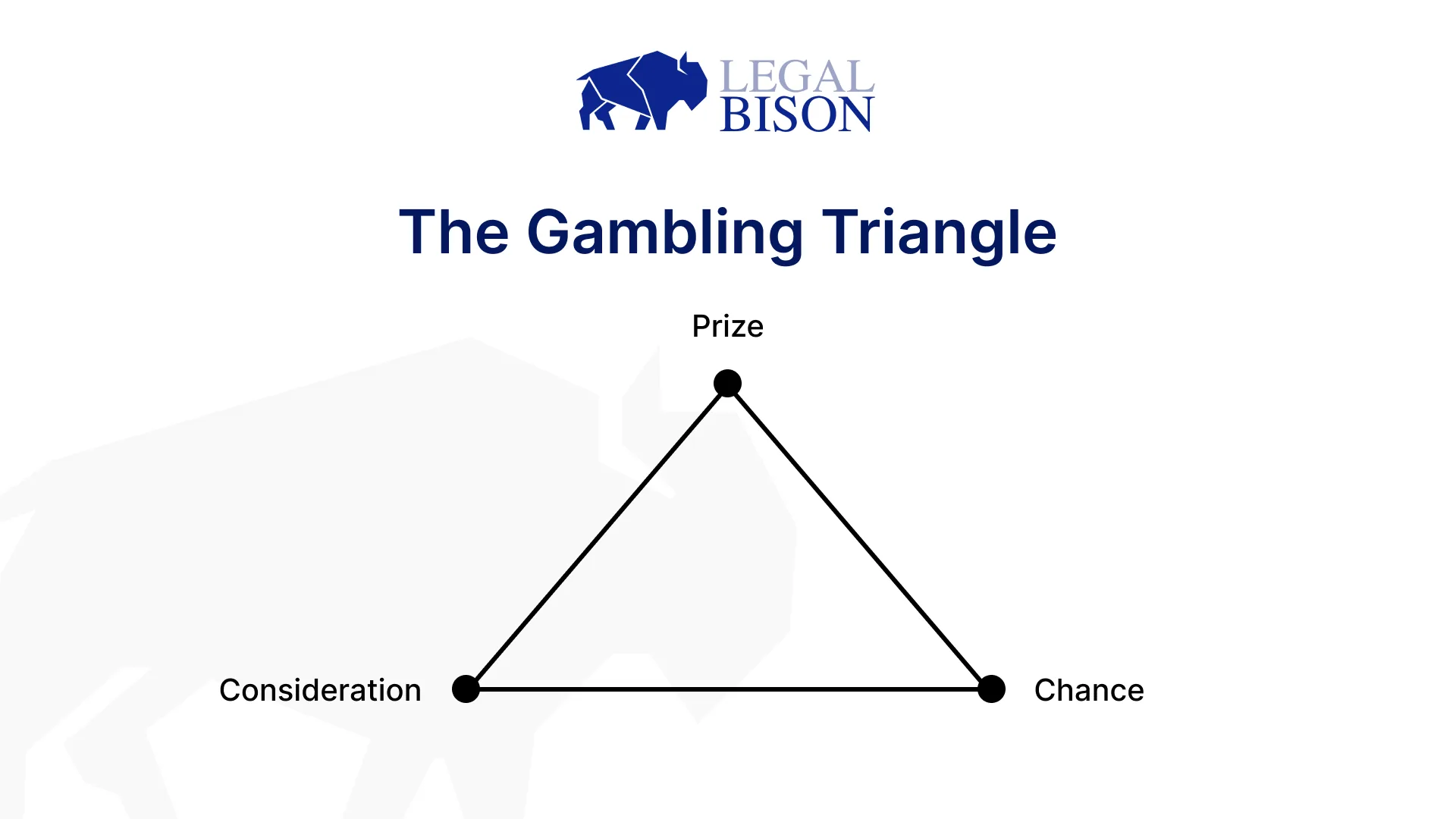
The answer comes down to what lawyers and regulators call the gambling triad. For something to be regulated as gambling under U.S. law, it generally needs three elements simultaneously:
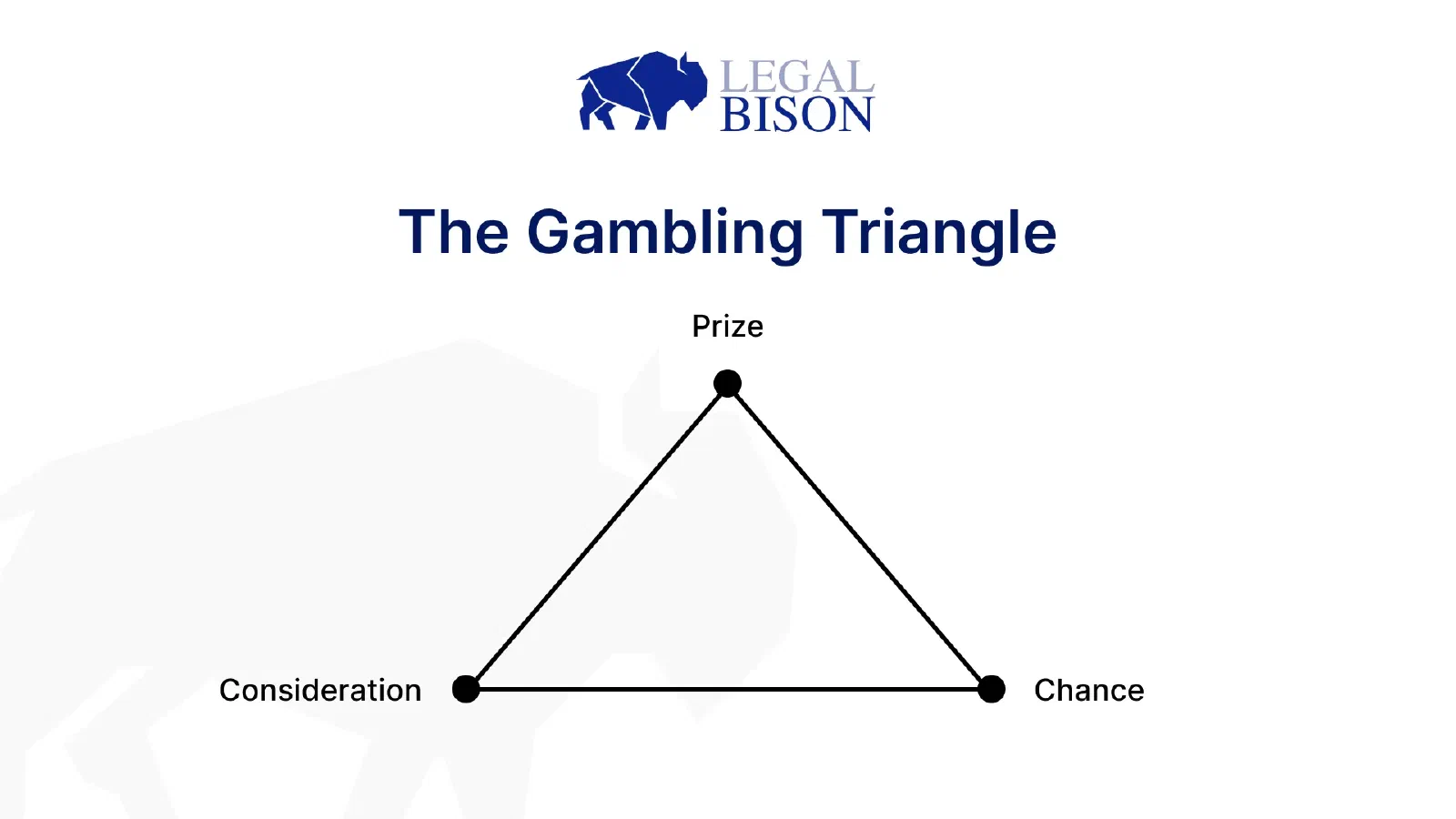
- Prize (something of value to be won)
- Chance (the outcome is determined at least in part by luck)
- Consideration (you paid something to participate)
Remove any one of those three, and the legal basis for classifying the activity as gambling collapses.
Social casinos, particularly sweepstakes operators, removed the consideration part. They do it through two mechanisms:
- No Purchase Necessary rule: sweepstakes coins must be genuinely obtainable without buying anything.
- Alternative Method of Entry (AMOE): platforms must offer a free entry route, typically a mail-in request, a direct website request, or a free daily allocation that gives players access to the sweepstakes currency without spending money.
By offering free ways to enter, these platforms argue they aren’t technically gambling, but rather a promotional contest where the game is just the delivery method.
This defense is getting weaker, however.
A 2021 court ruling involving Big Fish Casino suggested that virtual chips could count as ‘things of value’ if users pay for them, even if they aren’t real money.
This creates a legal risk, meaning platforms must strictly enforce their ‘free entry’ rules to avoid being treated like illegal gambling operations.
Also read: Are No-KYC Online Casinos Legal?
Where does social casino revenue comes from
The main question we hear is: if games and coins are free, how do these businesses make money?
The answer is that users pay for the entertainment of playing, like some of the following:
- The Freemium Model: Platforms give players a free starter amount of “Gold Coins” to get them hooked. Once those run out, players buy packages to keep the game going.
- Tiered Pricing: Businesses offer coin bundles at different price points. Small packages catch impulsive buyers, mid-range packages serve regular players, and expensive bundles target those willing to spend more.
- Built-in House Edge: Even without real prizes, the games use math similar to a casino. Because the software retains a small percentage of every wager, the platform earns money over time from volume, regardless of whether a player wins or loses a specific round.
- Retention Tools: Daily rewards and streaks keep players coming back.
- VIP Programs: High-spending players get special perks, and they often make up a large portion of the revenue.
- Advertising: Non-paying users can still generate money through display ads or partnerships.
The payment processing problem
Even if a business is legal and profitable, payment processing can be its biggest hurdle. When customers buy game coins with a credit card, the transaction gets a “Merchant Category Code” (MCC) that tells the bank what kind of business is operating.
There are two main categories:
- MCC 5816 (Digital Goods): This code is for software and digital items. It’s the preferred choice because it has fewer restrictions, lower fees, and higher payment approval rates.
- MCC 7995 (Gambling): This code is for betting services. Many banks automatically block these transactions. If a business is labeled this way, it faces higher fees, strict monitoring, and a significant drop in successful payments.
The risk is that if a platform’s games look too much like gambling, banks might force them into the 7995 category, which can cut deeply into revenue.
To stay in the 5816 category, we advise operators to keep their “social play” purchases and any “sweepstakes” entry mechanisms completely separate. If these are bundled together, it can look like gambling, inviting the very regulatory and banking scrutiny the business needs to avoid.
Related: A Look Into the Rising Trend of Sweepstakes Sports Betting
Where does social casino market is heading
The rapid growth phase for social and sweepstakes casinos is over. States are now cracking down, with California’s recent law (AB 831) effectively banning the dual-currency model, a move other states are likely to follow.
Operators who will survive this shift generally fall into three categories:
- Compliant platforms: Companies that invested early in strict age verification, precise location tracking, and responsible gaming tools can prove they are responsible and not exploitative.
- B2B platforms: Rather than operating directly, some companies now build the underlying technology; like payment processing and compliance tools and license it to others, which is less risky than managing individual apps.
- Global operators: Businesses that can adapt their models for different countries are finding new opportunities, though this requires careful legal navigation.
Essentially, companies that act like regulated, responsible businesses are the ones built to last. Consult your iGaming business with LegalBison experts for a clear licensing pathway and safe launch.
FAQ
What is the difference between a casino and a social casino?
Real casinos involve betting money for a chance to win money, so they need special licenses. Social casinos use fake, valueless points, so they aren’t considered gambling and don’t need those licenses.
Can you win real money at a social casino?
In pure social casinos, no. In sweepstakes casinos, you can sometimes win prizes, but only with special “sweepstakes” coins, not the regular play-money coins.
Are social casinos free?
They are free to start, but designed to make you pay. You get a starter amount, but eventually, you’ll run out and need to buy more to keep playing.
Who can run a social casino business?
It depends on the rules where you are. Pure social casinos are generally fine, but sweepstakes casinos must follow strict laws, like allowing free entry without a purchase and are facing tighter rules in many places. You should always get professional legal advice before starting.